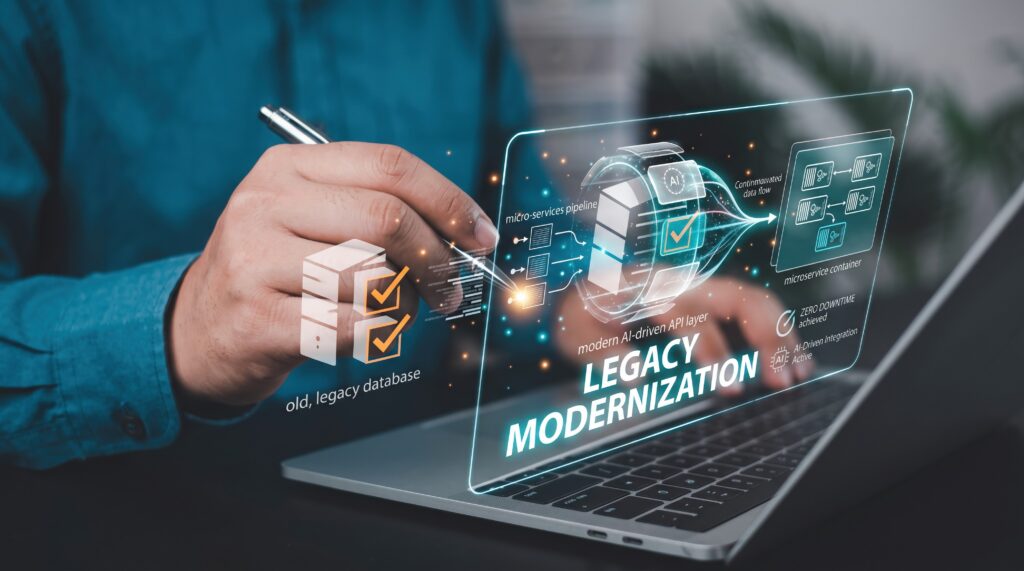
There’s a property management system running at hotels around the world that was first deployed before most of the people checking in today owned a smartphone. It’s been patched, extended, and customized into something its original architects would barely recognize, yet it’s still the operational core around which everything else is built.
This is the norm across the hospitality industry. The software that powers bookings, manages guest data, drives loyalty programs, and enables the guest experience is, in many cases, a decade or more old. And the implications of that reality are becoming impossible to ignore.
How hospitality got here
The legacy code problem in hospitality didn’t happen because leaders made bad decisions. It happened because the industry has some structural characteristics that make technology debt particularly easy to accumulate.
High operational continuity requirements. A hotel doesn’t stop operating so you can upgrade its software. Every system that touches the guest journey, from booking and check-in to room assignment, housekeeping coordination, and billing, has to work every day without interruption. That makes meaningful platform changes feel inherently risky, so they get deferred. The system that’s working today, however imperfectly, is always preferable to the risk of something breaking during a busy weekend.
A history of custom builds. Many hospitality brands built proprietary platforms at a time when off-the-shelf solutions didn’t meet their needs. Those custom systems often became deeply embedded in operations, and deeply customized, to the point where replacing them feels like rebuilding the foundation of a building while people are still living in it.
Acquisitions and portfolio complexity. Hotel groups and travel brands often grow through acquisitions, inheriting a patchwork of different platforms, data models, and integrations that were never designed to work together. Rationalizing that complexity requires both technical skill and organizational alignment, and it rarely gets prioritized over revenue-generating initiatives.
Underinvestment in technology. For much of hospitality’s history, technology was viewed as a cost center rather than a revenue driver. Capital went toward property improvements, not platform modernization. That perspective has shifted significantly, but the backlog it created hasn’t been addressed at the same pace.
What legacy code is costing hospitality brands right now
The costs of legacy systems in hospitality aren’t theoretical. They show up in the business every day.
The most visible cost is slow product iteration. When your booking platform or mobile app is built on a legacy stack, adding new features such as digital check-in, in-stay upsell capabilities, or personalization requires navigating layers of code that weren’t designed to accommodate them. Competitive features that should take weeks to ship take months, and some never ship at all.
Then there’s data that can’t be unified. Personalization at scale requires a single view of the guest: their booking history, preferences, service interactions, loyalty status, and food-and-beverage choices. Legacy systems store data in silos by application rather than by guest, so getting a unified guest profile requires complex, brittle integrations, or means giving up on personalization altogether.
Integration friction compounds the problem. The modern hospitality technology landscape includes many third-party solutions that hotels rely on, among them channel managers, OTA connections, revenue management systems, messaging platforms, keyless entry systems, and spa booking tools. Every integration with a legacy platform is a risk point: a fragile connection that requires ongoing maintenance and frequently breaks when either side updates.
The inability to leverage AI may be the most consequential cost of all. AI-powered revenue management, predictive maintenance, personalization engines, and demand forecasting all require clean, accessible, real-time data. Legacy architectures, with their siloed data stores and batch-processing patterns, can’t support these capabilities reliably. The result is that hospitality brands are shut out of capabilities their more technically advanced competitors are actively deploying.
Finally, there’s security exposure. Legacy systems run on older frameworks with outdated dependencies. In an industry that stores significant volumes of payment and personal data, that’s a meaningful and growing risk.
The “wait and replace” trap in hospitality legacy modernization
One of the most common responses to the legacy platform problem in hospitality is to wait for the right moment to replace the core system entirely, a “big bang” migration that will finally modernize everything at once.
This approach is understandable, but it usually becomes a trap. The “right moment” rarely arrives. The replacement project, when it finally gets funded and launched, almost always takes longer and costs more than projected. The cutover introduces operational disruptions. And the new platform, installed without addressing the underlying data and integration complexity, begins accumulating its own technical debt almost immediately.
The brands making the most progress on legacy modernization tend not to wait for a perfect window to replace everything. They take an incremental approach: identifying the areas of highest friction and highest business impact, and modernizing those in phases while keeping operations running and building organizational competence along the way.
What an incremental approach looks like
A pragmatic legacy modernization strategy in hospitality typically focuses on a few key priorities.
API-first integration. Building a modern integration layer that connects legacy systems to new capabilities via APIs, without requiring a full platform replacement, is often the fastest way to unlock new functionality. This mirrors where the wider market is heading: IDC’s PMS MarketScape analysis describes a shift from monolithic systems toward flexible, API-driven platforms, and notes that interoperability, not features alone, increasingly defines a system’s value. An API-first layer lets brands add digital check-in, mobile key, AI-powered recommendations, and other guest-facing features without waiting for a full PMS modernization.
Decoupling and strangling the legacy core. Rather than replacing a legacy system all at once, an incremental approach migrates functionality piece by piece, wrapping the legacy core in modern services and gradually shifting capabilities onto the new architecture. Over time, the old system is “strangled,” surrounded and replaced by modern equivalents, without a single high-risk cutover event.
Unifying the data layer. Before AI-powered personalization is possible, the data has to be accessible. Building a unified, scalable data platform that aggregates information from across legacy systems, even before those systems are replaced, can unlock significant personalization and analytics capabilities in the near term.
Investing in engineering depth. Legacy modernization requires engineering expertise that goes beyond typical hospitality IT capabilities. It calls for architects who understand both the legacy landscape and modern cloud-native patterns, and engineering teams that can execute complex migrations without disrupting operations.
In practice: a luxury travel brand modernizes a decade-old codebase
A global luxury hospitality company was constrained by a decade-old .NET codebase that limited feature velocity, weighed on the guest experience, and carried ongoing performance costs. Instead of a single high-risk replacement, it ran a multi-year, incremental modernization with Gorilla Logic.
The legacy code was refactored using the Strangler Fig pattern and an event-driven design, letting modern services coexist with legacy components and take over functionality piece by piece. The application moved from a Windows-tied architecture to .NET 6 on Linux, Azure Functions replaced rigid backend workflows with scalable event-triggered services, Azure Cosmos DB provided a flexible, globally distributed data layer, and a new Azure DevOps pipeline replaced manual QA with automated testing.
The brand is now deploying features twice as fast, improving its web and mobile experiences, reducing operational costs through serverless and Linux-based deployments, and scaling quality through automated testing. Read the full case study.
The competitive clock is running
The hospitality industry has a window to close its technology gap, but it’s not unlimited. Guest expectations are the reason it’s closing. In the Oracle and Skift study Hospitality in 2025, nearly three-quarters of travelers said they want to manage their hotel experience from a mobile device, and a similar share expressed interest in hotels using AI to tailor services and offers. Brands that invest in platform modernization now will be able to deliver the personalized, seamless, digitally native experiences that loyalty is increasingly built on. Those that don’t will find themselves competing on price and physical product alone, against competitors who can do both.
Legacy code is a solvable problem. The path forward isn’t easy, but it is clear, and the brands that commit to it are already seeing results.