
Twenty to forty minutes. According to research by Sherlocks.ai and LogicMonitor’s SRE Report 2026, that is the median time it takes to diagnose the root cause of an incident in a well-instrumented environment, and it’s the gap that defines live streaming reliability at scale. For most organizations, that gap is a cost center and a frustration. For a streaming platform in the middle of a live broadcast, it is an entirely different kind of problem.
Audiences have no context for infrastructure incidents. A frozen frame, a failed load, a broken stream, those are the signals viewers act on, and they act quickly. Live events have no replay option in the user experience sense: the moment passes, the audience either had it or didn’t. That asymmetry is what makes live broadcast engineering a useful lens for thinking about reliability infrastructure more broadly. The constraints are extreme enough to surface exactly what is built well and what is borrowed time.
Detection has gotten fast. Diagnosis has not kept pace. Closing that gap is a specific, solvable engineering problem, and the path through it runs through four connected capabilities.
What live event delivery actually requires from engineering teams
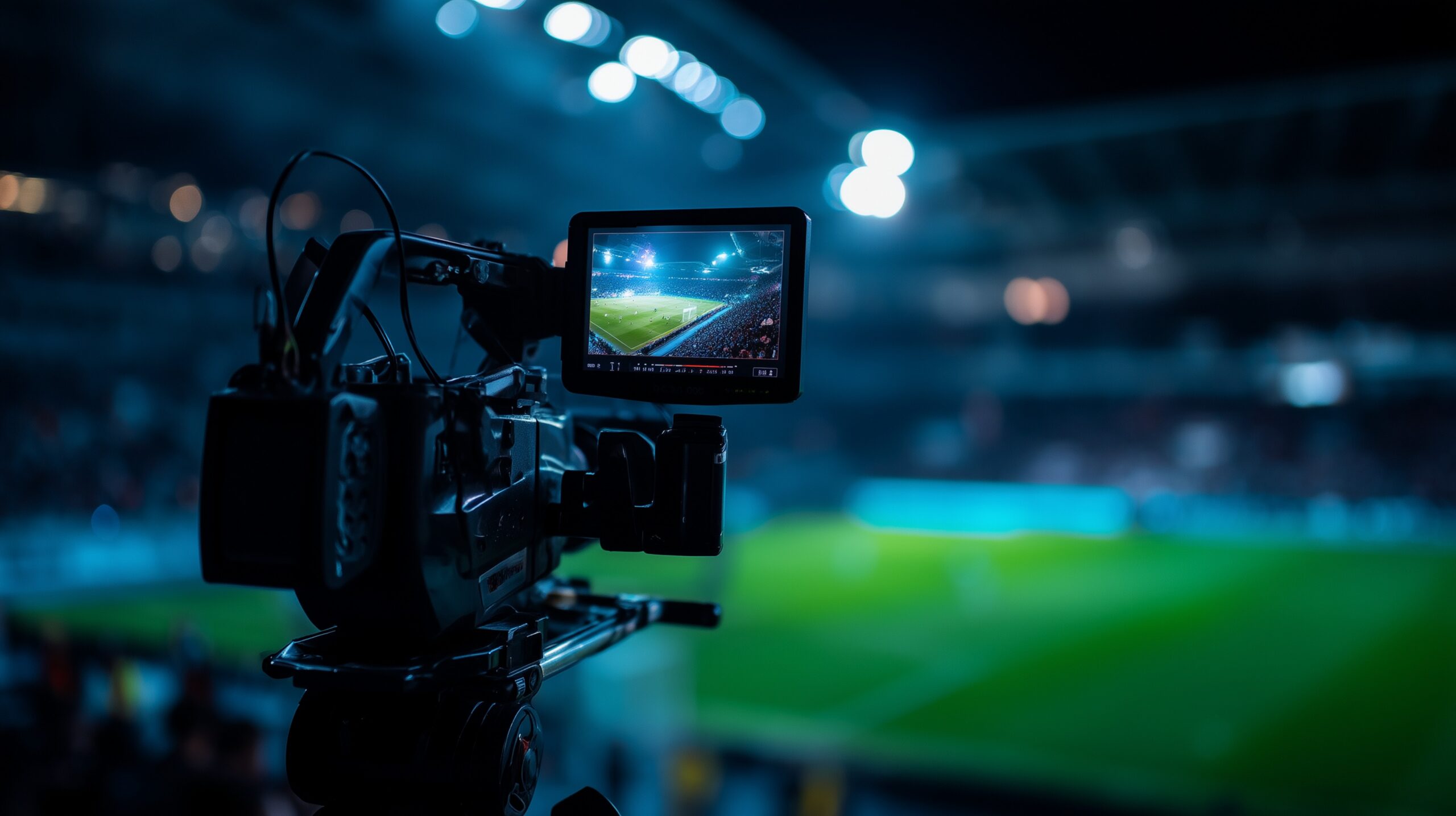
Streaming at scale for live sports and events is structurally different from on-demand delivery. A catalog series absorbs traffic gradually over days and weeks. A live event front-loads millions of concurrent viewers into a window measured in minutes. According to Streaming Media Global’s 2026 analysis of live sports infrastructure, the unpredictable nature of live sports makes scalability essential in ways that traditional on-demand architecture wasn’t designed to address, and platforms that handle a documentary series without issue can fall apart when a major live event kicks off.
Cloud architecture has addressed the scaling problem meaningfully: dynamic resource allocation, multi-region redundancy, adaptive bitrate encoding, edge deployments closer to viewers. What cloud doesn’t solve on its own is the monitoring and response model that determines what happens when something goes wrong at peak load. That’s a workflow design question, not an infrastructure vendor question.
Gorilla Logic worked directly on this challenge with a global media company preparing to stream the world’s largest multi-week sporting event, an engagement where any monitoring gap at peak load would have been immediately visible to millions of viewers simultaneously. The infrastructure required multi-region AWS ECS architecture for high availability, traffic load testing using the Akamai Load Testing Suite and Artillery.io to simulate extreme user spikes against production traffic patterns, and real-time monitoring via Grafana, Akamai Hydraulics, and Datadog to surface issues before they reached viewers. The critical design principle: all of that preparation happened before the event window, not during it.
More observability data isn’t closing the incident diagnosis gap
Most streaming platforms have invested substantially in observability. Metrics, logs, traces, dashboards: the telemetry infrastructure is often extensive and expensive. The challenge Sherlocks.ai’s 2026 analysis identifies is not data availability; it is what happens after an alert fires. Engineers open dashboards that show symptoms (a latency spike, a rising error rate, a downstream service timing out) and still spend 20 to 30 minutes correlating signals manually to identify what actually changed and why.
According to LogicMonitor’s SRE Report 2026, drawing on responses from over 400 site reliability, DevOps, and IT professionals, toil still accounts for 34% of engineers’ time despite growing AI adoption. That is a structural signal. Adding more telemetry data does not shorten the investigation window because the bottleneck is not visibility, it is the manual correlation step that turns visible symptoms into an actionable diagnosis.
What closes that gap is an intelligence layer sitting on top of the existing telemetry stack: one that correlates signals across metrics, logs, traces, and deploy history automatically, and surfaces a probable root cause along with the teams responsible for the affected components. As Dynatrace’s 2026 observability predictions describe it, reliability, availability, security, and observability are converging into a single requirement, and the ability to absorb disruption and recover quickly is becoming the primary measure of operational excellence.
Automating incident triage is an engineering workflow problem
MTTR gets tracked as an operational KPI, but it’s better understood as a measure of how well engineering workflows are designed. A team with comprehensive observability and no automated correlation will have worse MTTR than a less-instrumented team with a well-designed triage process. Data doesn’t resolve incidents; a workflow that turns data into diagnosis does.
Agentic AI applications that have produced measurable MTTR improvements share a common pattern: they handle the correlation work that precedes human diagnosis. Read infrastructure logs across all systems. Identify where the anomaly originates. Map which teams own the affected components. Surface that context before the on-call engineer has to reconstruct it manually under pressure. What used to take 20 to 30 minutes of dashboard navigation happens in seconds. In high-stakes live event environments, that compression changes the character of the incident from a customer-visible problem to an internal resolution.
For live events specifically, there’s an additional workflow layer worth building: pre-event simulation using captured production traffic. GoReplay and similar tools capture traffic patterns during high-activity events, such as a major sports final or a global awards broadcast, and replay them against updated infrastructure to validate behavior before the next event. This approach, documented in multiple large-scale media engineering engagements, gives teams evidence-based confidence rather than optimistic estimates heading into a high-stakes broadcast window.
SRE, DevOps, and cloud engineering are converging into a shared model for live streaming reliability
One of the more consequential shifts in media engineering right now is the convergence of SRE, DevOps, cloud engineering, and AI operations into shared delivery models. As Dynatrace’s 2026 observability predictions describe explicitly, AI will stop operating as an isolated discipline and become a standard component of cloud-native delivery, with AI engineering, cloud, SRE, and security teams converging around common pipelines, shared SLOs, and unified accountability for the full lifecycle of AI-enabled services.
For media platforms that have maintained separate SRE and DevOps tracks, that convergence creates a real opportunity to redesign team structure around the actual reliability problems rather than legacy organizational boundaries. Shared observability, unified incident governance, and common delivery pipelines are not just operational improvements, they are the architectural foundation that makes AI-driven reliability automation effective at scale.
The sequencing that engineering organizations have found most effective: teams do not reorganize first. They identify a specific high-friction reliability workflow such as live event monitoring, deployment risk assessment, post-incident root cause generation, and build the shared model around solving that problem. Structural alignment follows workflow improvement, not the other way around.
Every event is instrumentation for the next one
A habit that separates high-performing live event engineering teams is treating each event as data collection for improving preparation workflows. Post-event analysis is not just a retrospective, it is input to the next preparation cycle. What traffic patterns emerged that were not anticipated? Where did monitoring surface noise that slowed triage? Which components showed latency degradation before they failed?
That feedback loop from event execution back into preparation is what allows engineering organizations to absorb growing live content commitments without proportional growth in incident risk. According to Streaming Media’s 2026 State of Live Sports Streaming report, major platforms (including the launches of ESPN Unlimited and Fox One as direct-to-consumer live sports services in 2025) are making multi-year infrastructure bets on live as the primary differentiation driver. Engineering infrastructure that gets sharper with each event, rather than starting from scratch, is what sustains delivery quality as those content commitments scale.
As NAB Show 2026 coverage reinforced, live sports workflows are no longer just about getting a signal from point A to point B, they are becoming extensible systems that must support live streaming reliability, personalization, and platform flexibility simultaneously. That is an engineering capability built over multiple event cycles, not deployed in a single sprint.
Live streaming reliability: the 20-minute window that decides the viewer relationship
The 20 to 40-minute incident diagnosis window that Sherlocks.ai and LogicMonitor’s research identifies is not an abstract operational metric for live streaming reliability. It is the window during which a live moment is either delivered or lost, and a viewer relationship is either sustained or broken. Audiences do not experience infrastructure incidents, they experience the stream stopping at a critical moment and not coming back in time.
The work Gorilla Logic has done with media platforms on live event reliability — engineering infrastructure that delivered 100% uptime and record viewership during the world’s largest multi-week sporting event — reflects the same principle that runs through each section of this article: reliability at live scale is not a function of monitoring coverage. It is a function of how well the workflow that turns signals into diagnosis is designed, and how deliberately each event cycle is used to sharpen that workflow for the next one.
Major platforms are making multi-year bets on live as the primary differentiation driver. The engineering organizations that will sustain those bets are the ones building live streaming reliability infrastructure that compounds, not the ones starting from scratch before each broadcast window.
Gorilla Logic has worked alongside media engineering teams on live event delivery, SRE workflow automation, and reliability infrastructure for over a decade. If your team is preparing for a major live event or rethinking your incident response model, we’re glad to share what we’ve learned.